
The history of trigonometry
We have all heard of the three trigonometric ratios that describe how the length of a triangle’s sides relates to the size of its angles. These ratios and the math behind them didn’t appear out of nowhere. They emerged over the course of history as their use evolved and the math behind them changed. So, where did trigonometry come from?
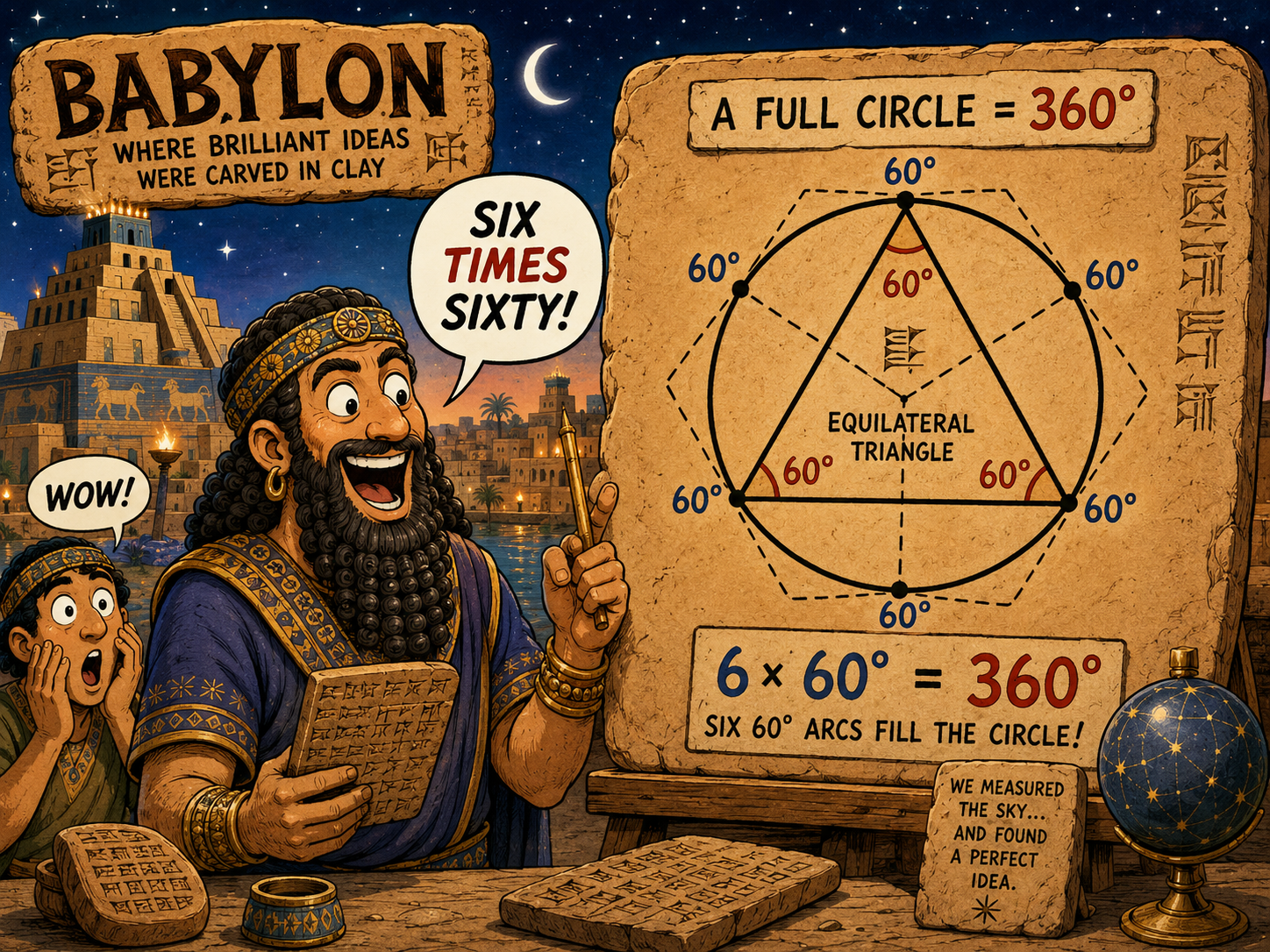
Ancient beginnings
To find the origin of triangle math, we have to go all the way back to ancient Babylon and the invention of the degree. The Babylonians used a number system based on 60 and they used equilateral triangles in construction. This meant they were the first to identify an angle between two sides, and find that an equilateral triangle has three of them. Because of their base 60 counting system, they thought one of these angles could be split into 60 equal parts, which was how the angles of an equilateral triangle came to be 60°. This gave birth to the measuring system we know today. Certain Babylonian tablets also contain early trigonometric tables that describe relationships between the sides of right-angled triangles. While they didn’t invent trigonometry, the Babylonians laid the foundation for triangle math.
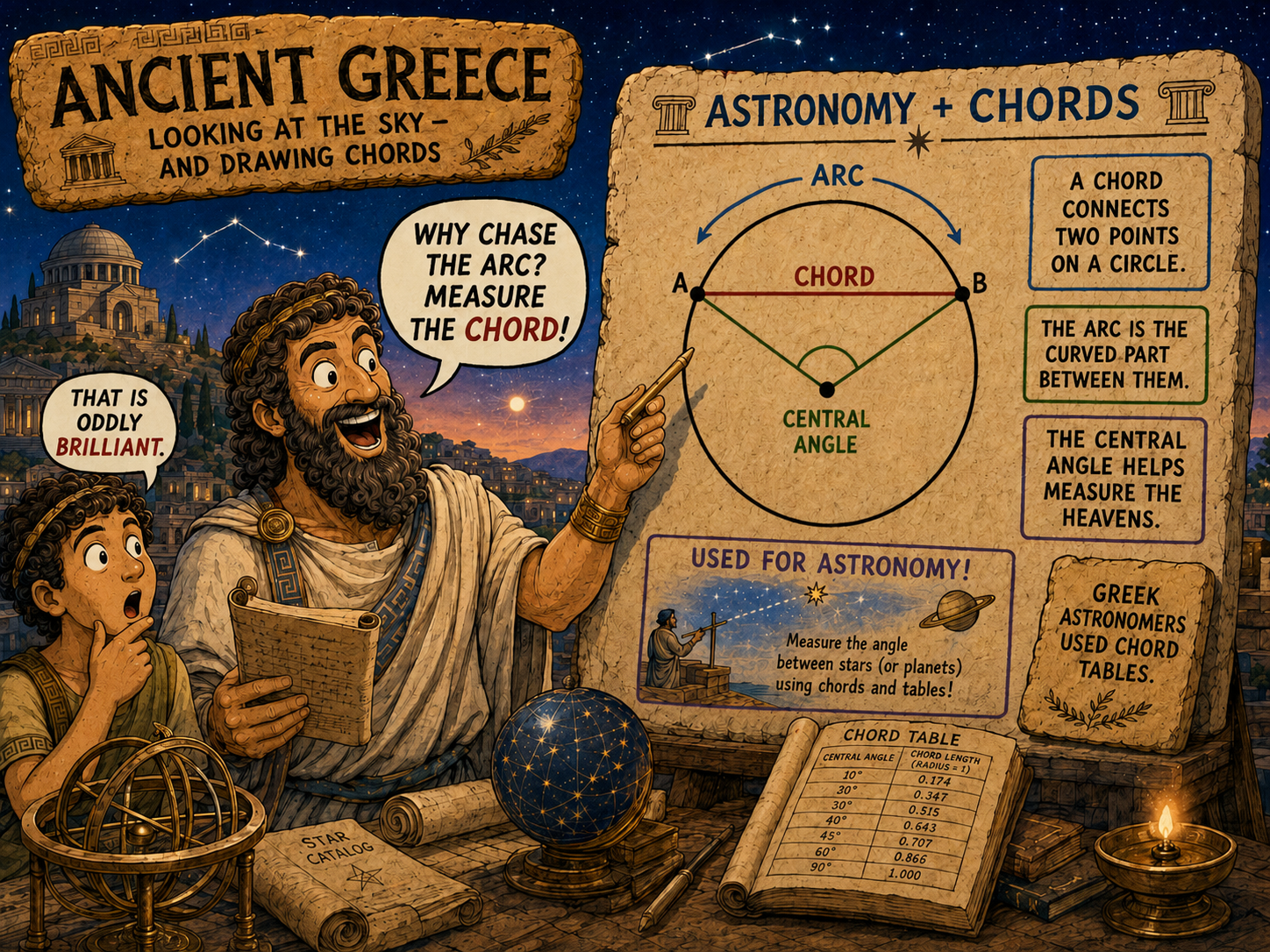
Enter, the Greeks
After the Babylonians, the next to develop triangle math were the Greeks. This came from their study of astronomy. Problems with triangles on circles that conventional geometry couldn’t solve evolved which forced them to invent new math. The Greek astronomer Hipparchus, often called the ‘father of trigonometry’, found relationships between chords in a circle and angles. He created the first chord tables that did the same job as our sine function and were used to help astronomers calculate the positions of celestial objects. Ptolemy, one of the most famous Greek astronomers, made the system much more powerful. He could use known values of chord lengths corresponding to angles like 36°, 60° and 90° to find other values and developed the ancestors to many of our modern trigonometric addition rules.
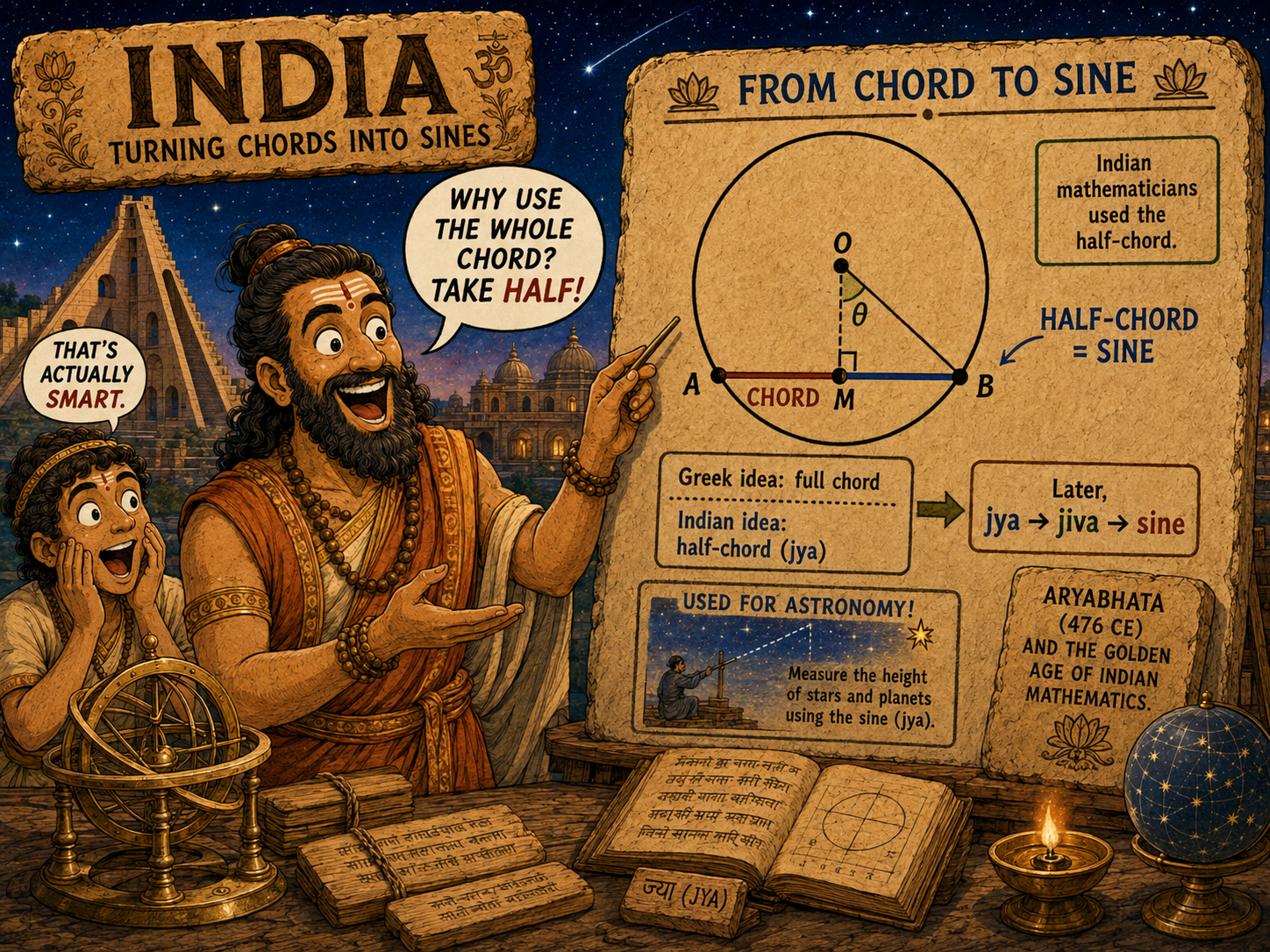
The birth of sine
In India, some of the most important transformations from circle geometry to modern trigonometry occurred. This included the invention of what became the modern sine function. This transitioned from working with chords to direct relationships between angles. Indian mathematicians also created the earliest surviving tables of sine values. This was done by dividing a quadrant of 90° into 24 equal parts and finding values for each of those parts. Over the next few hundred years this developed further into methods of calculating sine using existing values.
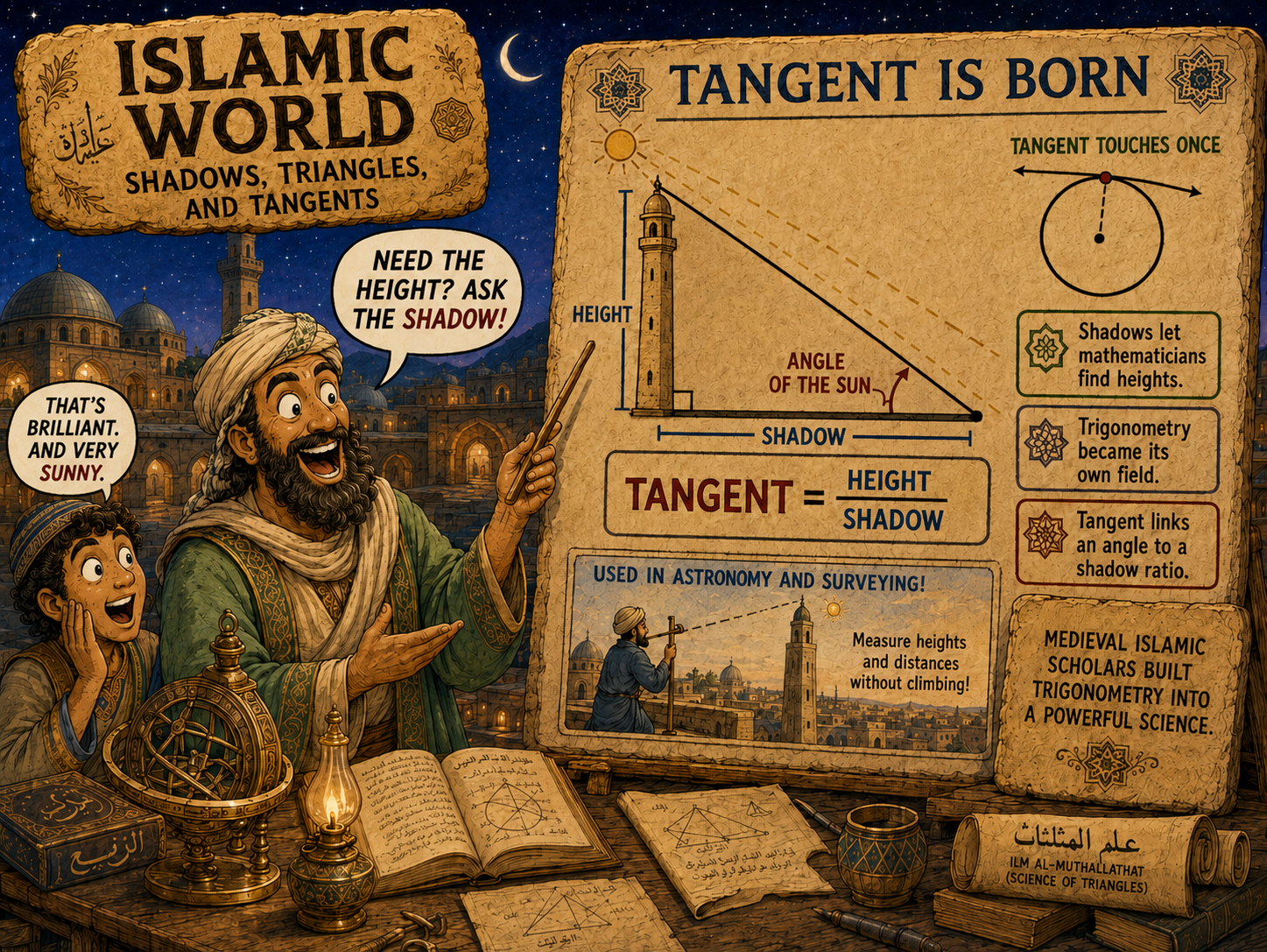
The Islamic world and the birth of tangent
When Indian and Greek astronomy was translated by Islamic mathematicians, trigonometry developed further and separated from circle geometry. Besides making trigonometric tables more precise, they developed the tangent function. This originated in problems to do with shadows and sundials before being repurposed in astronomy. They also firmly established trigonometry as a separate discipline by finding applications beyond astronomy in geography and architecture. Islamic mathematicians also developed the sine rule, one of the most crucial rules in trigonometry today.
Europe - trigonometry in its modern form
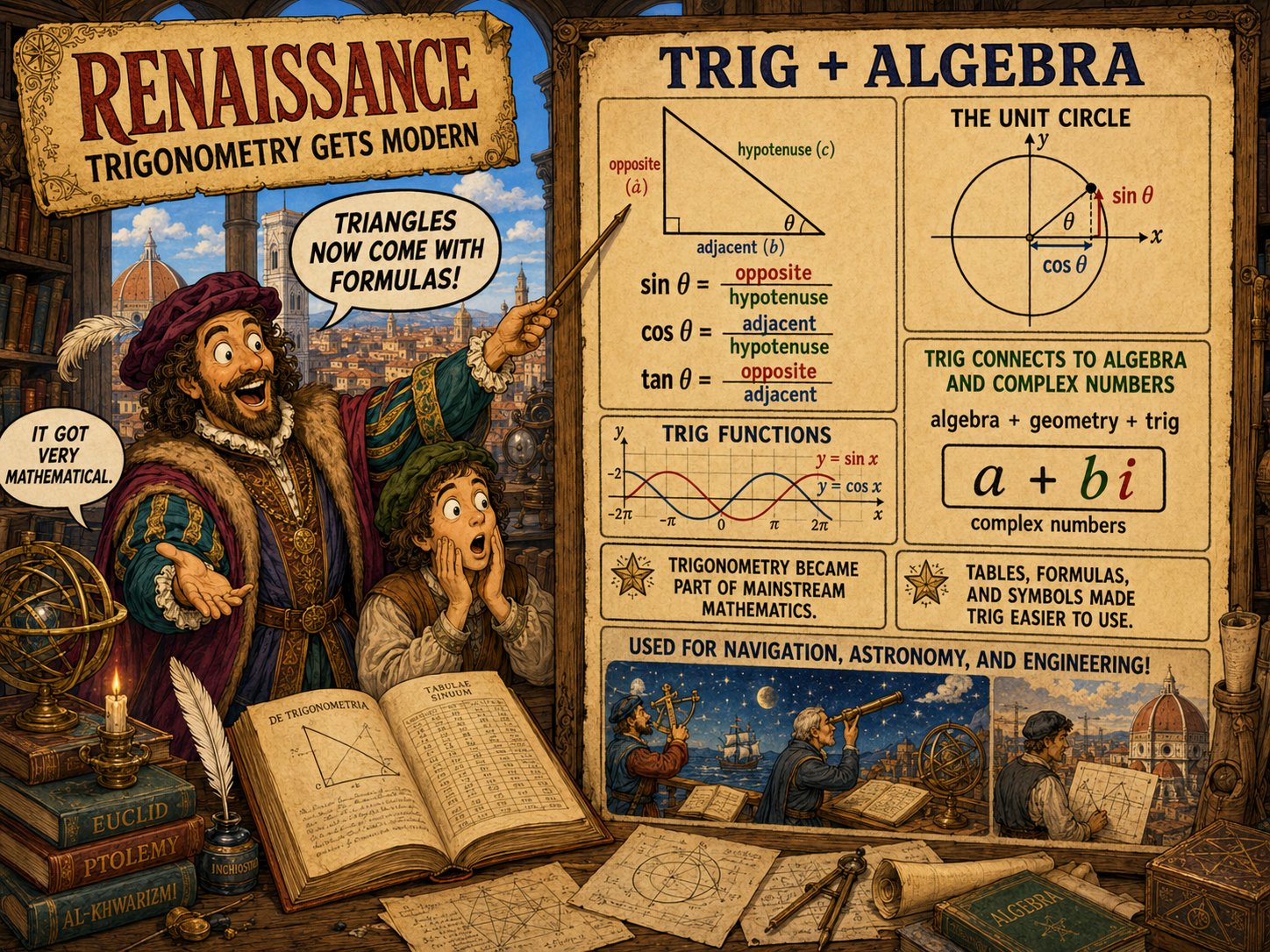
During the Renaissance, European mathematicians began studying trigonometry separately from astronomy. The first European work dedicated to triangles was published in 1533 and dealt with both plane and circle trigonometry. It also became more sophisticated through the work of astronomers like Copernicus, expanding the use of trigonometry in mapmaking, geography and astronomy. In 1599, the word trigonometry first appeared, being made from the Greek words for triangle and measure. This became a widely accepted name 1700 years after people first began studying triangles. By the 1630s, modern notation emerged and became widespread. In the 1700s, it became linked to algebra, calculus and complex numbers. This transformed the trigonometric ratios from tools for measuring triangles into functions that could be used to find complex relationships.
In modern mathematics, trigonometry is used both in measuring triangles and in areas that have nothing to do with triangles at all. This includes the math of waves, which is useful in science and computer graphics. Trigonometry remains a powerful tool in astronomy just as it was during the time of the ancient Greeks but has become something much larger and more powerful than it was when it was first discovered.
